The Generative Testament
Every computational function in ORGANVM is also a generative function. The system renders its own density into experience — producing visual art, schematics, statistics, sonic parameters, and prose from the same algorithms that govern its operation.
INST-GENERATIVE-TESTAMENT · INV-TESTAMENT-001 (Generative Completeness)
Output Modality Register
System Self-Portrait
The system describing itself across multiple media — every artifact generated from live registry data by the testament pipeline.
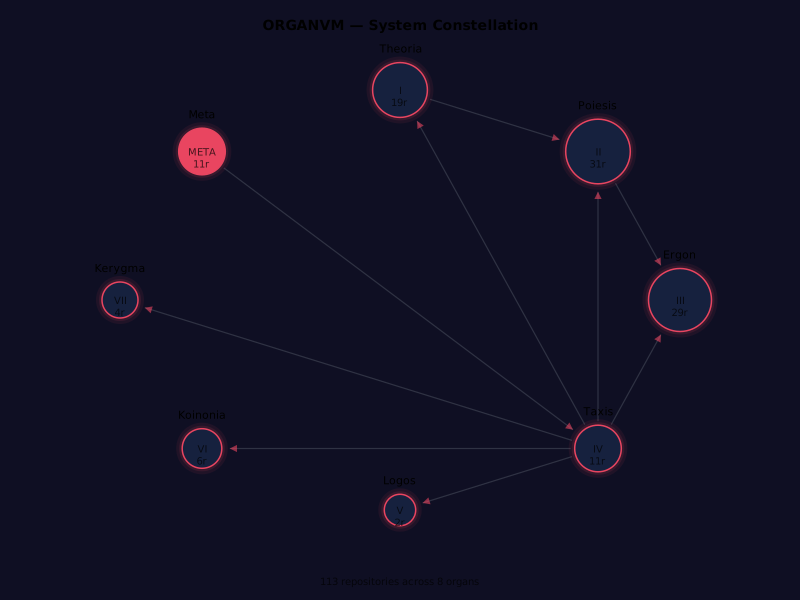
System Constellation
117 repositories across 8 organs as a stellar constellation — each node sized by repo count, colored by the taste.yaml palette.
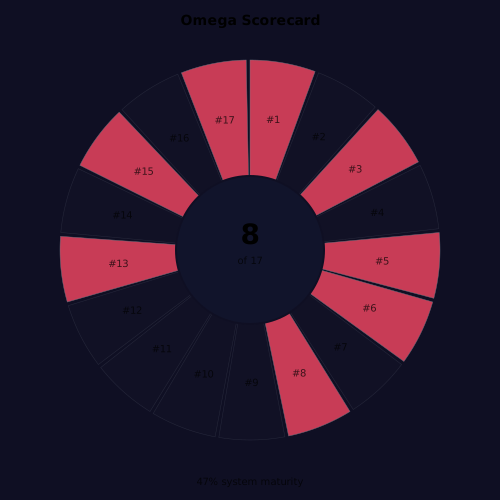
Omega Scorecard Mandala
17-criterion maturity scorecard as a radial mandala — met criteria filled with accent, unmet shown as muted outlines.
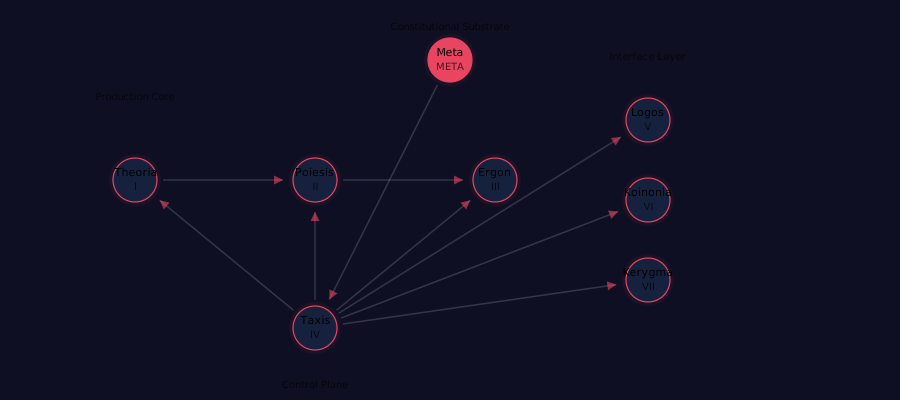
Dependency Flow
Unidirectional organ dependency architecture — Production Core (I→II→III), Control Plane (IV), Interface Layer (V-VII), Meta (zero-order substrate).
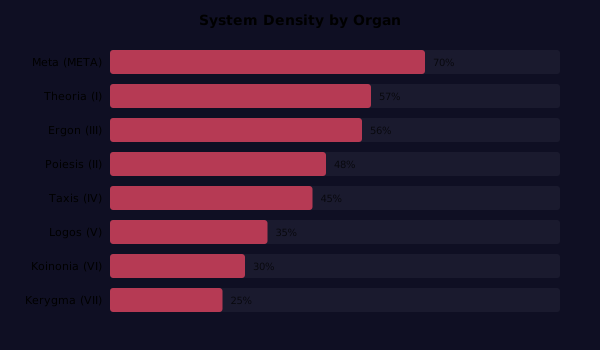
Organ Density Portrait
Per-organ AMMOI density as horizontal bars — the system's structural health at a glance.
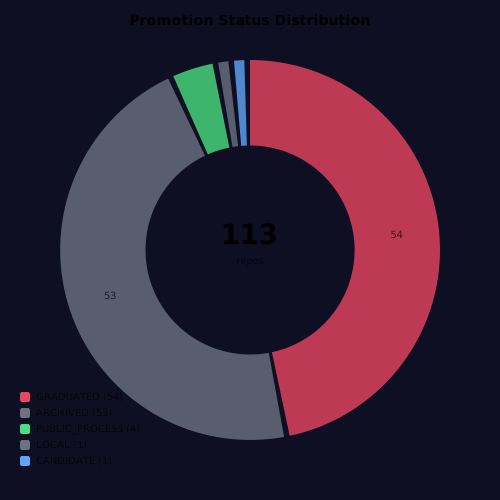
Status Distribution
Promotion status distribution as a donut chart — GRADUATED, CANDIDATE, PUBLIC_PROCESS, LOCAL, ARCHIVED.
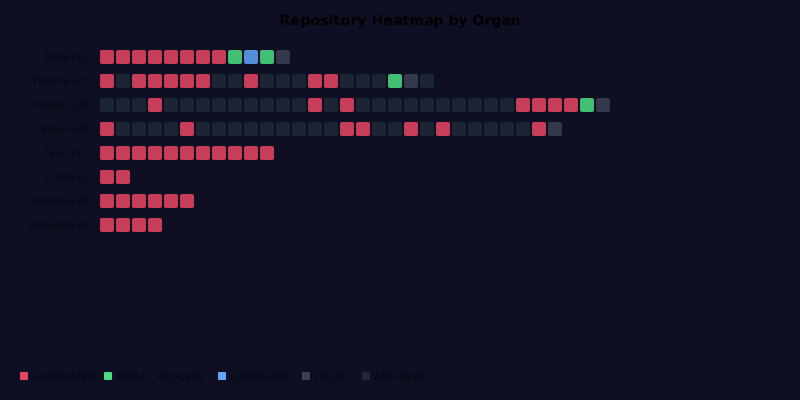
Repository Heatmap
All 117 repos as colored squares grouped by organ — color indicates promotion status.
Organ Identity Cards
Each organ rendered as an SVG identity card — repo count, flagship count, promotion status, all derived from the live registry.
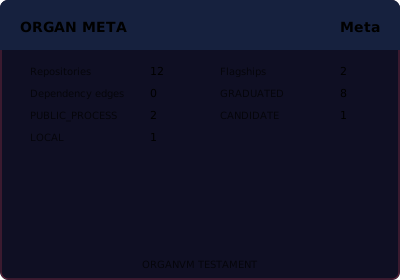
Organ META — Meta
Identity card for the constitutional substrate
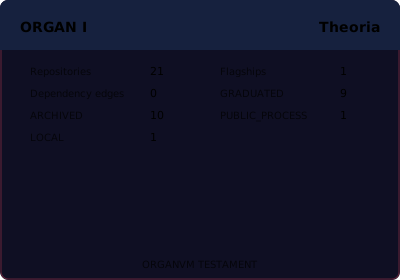
Organ I — Theoria
Identity card for foundational theory
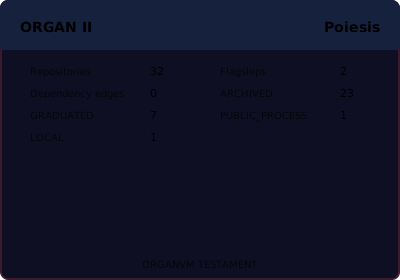
Organ II — Poiesis
Identity card for generative art
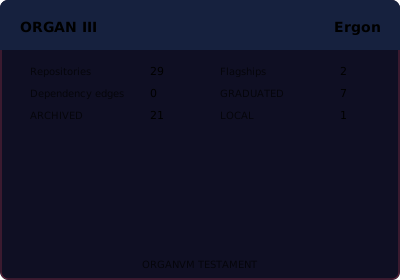
Organ III — Ergon
Identity card for commerce
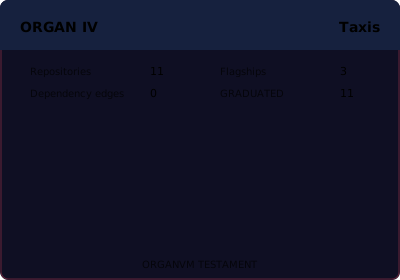
Organ IV — Taxis
Identity card for orchestration
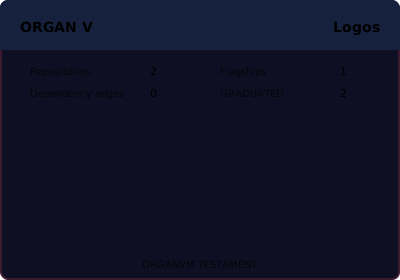
Organ V — Logos
Identity card for discourse
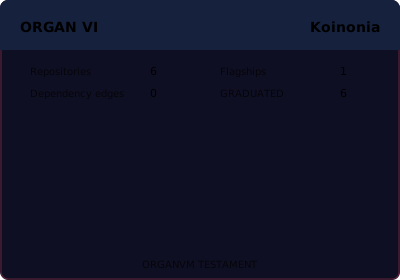
Organ VI — Koinonia
Identity card for community
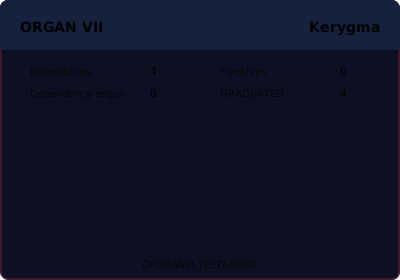
Organ VII — Kerygma
Identity card for distribution
Constitutional Grounding
The generative testament is grounded in a 2,400-year intellectual genealogy — from Aristotle's self-moving movers through Llull's Ars Magna, Kant's self-organizing nature, Maturana and Varela's autopoiesis, Luhmann's system self-description, to Galanter's generative art. 46 classified claims across 17 academic sources. 5 novel claims. 0 contested.
“A system that wants self-presence must maintain an active cosmology of itself.” — Virtual-System-Architecture transcript